
Table of Contents
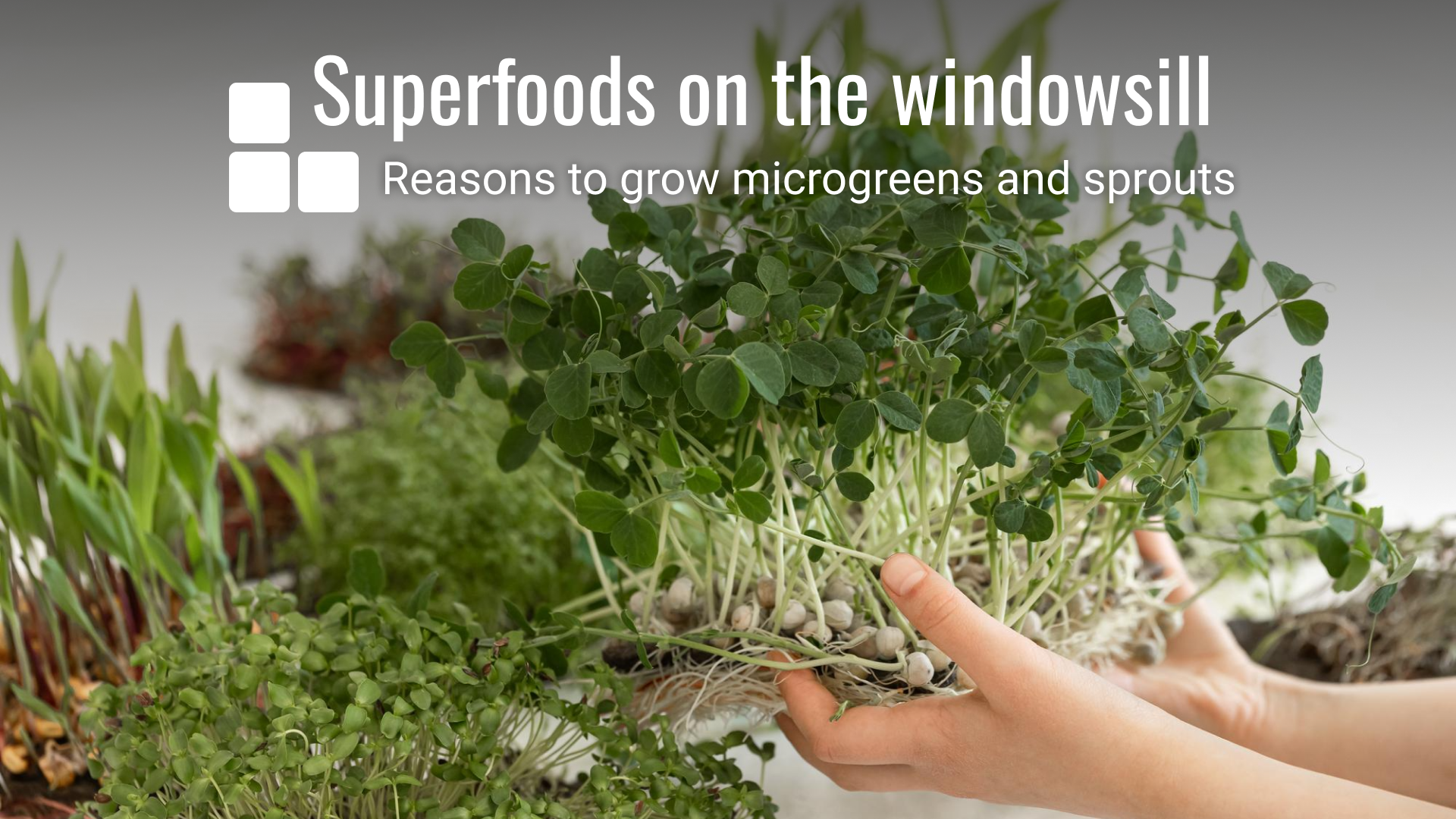
Is it possible to have your own vitamin-packed crop without a garden, greenhouse or waiting weeks for the first harvest? Yes, microleaves and sprouts are real superfoods that you can grow on your windowsill. The use of young plants is gaining in popularity, but it is not at all a new idea. Already in the 1980s, American restaurants started serving them. Initially, microleaves and sprouts were treated as luxury food served only in diners. For the past few years, they have increasingly been planted by farmers. In addition, superfoods are also grown at home.
What are microleaves and sprouts?
Microleaves and sprouts are young plant forms that differ in their growth stage and method of cultivation. Sprouts are the seeds that germinate. They are eaten whole, including the root, the stem. The process of growing them is done without soil, often in special germinators or on moist gauze, and usually lasts from 2 to 7 days.
Microleaves, on the other hand, are young plants at the stage when the first leaves appear in growth, usually 7-14 days after germination. They are grown in soil or other substrate and harvested by cutting off the aboveground part, without roots.
Microlots – not just a business idea
Due to the growing demand for healthy food, microleaves are gaining popularity among farmers and restaurateurs. Their cultivation is relatively simple and quick, with a production cycle of just a few weeks, allowing for frequent harvests and efficient use of growing space. Restaurants are increasingly choosing to grow their own microleaves or sprouts so they can offer fresh, flavourful side dishes, reducing supply costs.
For similar reasons, home cultivation of microleaves is widespread, especially among those concerned with a healthy diet. All you need for this is a windowsill and basic gardening accessories.
Health benefits of microleaves and sprouts
Microleaves and sprouts are a rich source of vitamins, minerals and antioxidants. Studies show that they contain much higher concentrations of nutrients than mature plants. For example, broccoli microleaves are rich in sulforaphane, a compound with powerful anti-cancer properties, and alfalfa sprouts provide large amounts of vitamin K, which supports blood clotting and bone health. There is a reason why microgreens and sprouts are referred to as superfoods.
Regular consumption of young plant forms can support the immune system, improve digestion and complexion and contribute to overall health (counteracting chronic disease and inflammation).

Other benefits of growing superfoods
In addition to their health benefits, microleaves and sprouts stand out for their intense flavour, which can enrich a variety of dishes. Growing them at home is extremely easy and doesn’t require a lot of space – all you need is a windowsill to enjoy fresh crops all year round.
In addition, home-grown micro-leaves and sprouts can act as a decorative feature, bringing an element of greenery and freshness to the kitchen. The rapid growth rate ensures a constant supply of fresh additions, which is particularly valuable in winter when the ability to enjoy unprocessed vegetables is limited.
How do you grow microleaves?
The process is not complicated. At the very beginning, you need to prepare for planting. The necessary items will be:
- a container or tray with drainage holes,
- A suitable substrate (e.g. horticultural soil),
- seeds intended for microleaves.
In addition, a light source – natural or artificial – must be provided. How do I grow microleaves at home with space, seeds and gardening accessories? Start by scattering the seeds evenly on the moist substrate of the container. The next step is to cover them gently with a thin layer of soil (an alternative is to grow the seeds directly in water, as with sprouts). You can wrap the container in plastic, pricking the surface from the top.
Once the plants have begun to sprout, the container is best placed in a warm, well-lit area (e.g. on a kitchen windowsill) and watered regularly, avoiding overwatering. Microleaves are ready for harvesting when they have reached a height of a few centimetres and have developed their first leaves proper. Harvesting involves cutting the plants just above the surface of the ground with sharp scissors or a knife.
Which plants are best to plant?
Many types of vegetables and herbs are suitable for growing micro-leaves. Popular ones are radish, watercress, broccoli, sunflower, beetroot, spinach, lettuce, basil, coriander and mustard. It is worth experimenting with different species to discover favourite flavours and compositions.
What should I eat micro leaf and sprouts with?
Micro leaf and sprouts go perfectly with salads, salads, sandwiches and wraps. They add crunch and freshness. They can also be used as a garnish for soups.
Superfoods such as microleaves are a natural vitamin bomb. It is worth introducing young plants to your menu, especially as the way they are grown is simple, quick and organic.
