
Table of Contents
In summer, temperatures on concrete city streets are even several degrees higher than in places surrounded by vegetation. At a time of increasing climate change, the creation of green urban areas is therefore extremely important. Flowers, shrubs and trees not only improve the aesthetics of the surroundings, but also help to fight the heat as they are natural air conditioners. How do you manage the space in a city so that there are as many green areas as possible? There are several possibilities – from the traditional to the unconventional.
What are green spaces?
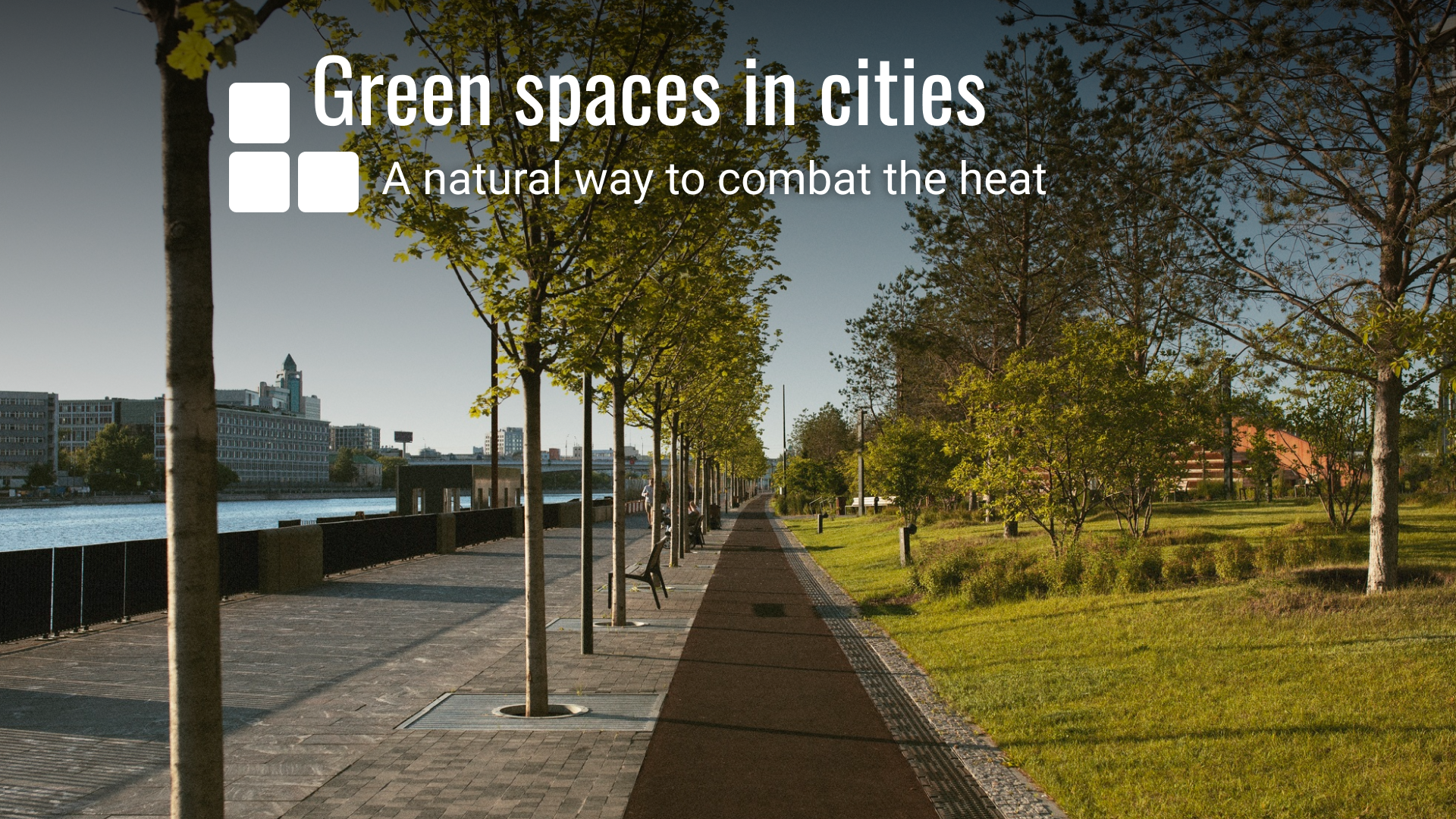
Green spaces in cities are areas covered with vegetation that serve an ecological, aesthetic and recreational function. They can be both natural and designed spaces such as parks, squares, gardens or forests. Urban green space also includes street greenery.
Such spaces are an integral part of the urban structure. They influence the quality of life of residents and the functioning of urban ecosystems.
Why are plants natural air conditioners?
Green spaces in cities act as air filters. Plants absorb harmful chemical compounds (e.g. sulphur or nitrogen oxides) and particulate matter that come from traffic and industry. At the same time, urban green spaces produce oxygen, improving the quality of the air that residents breathe.
NASA research carried out with the help of a satellite has shown that vegetation plays a large role in reducing greenhouse gases, helping to combat climate change. Experts recommend that in a well-designed city, green spaces should occupy up to 65% of the surface area. In this way, heat islands (hot roadways, buildings, pavements, etc.) do not affect the ambient temperature as much, because greenery neutralises the heat – it is only about 1.3 degrees Celsius warmer.
How can green spaces help the environment?
In the face of ongoing climate change and increasing urbanisation, the role of green spaces in cities is becoming particularly important. These spaces are not just an aesthetic addition to the built environment. Green spaces support cities in combating the effects of global environmental change. Their presence can counter extreme weather events and support natural processes in nature.
Green spaces help reduce the effects of climate change by regulating microclimates, managing rainwater and supporting biodiversity, among other things.
Regulation of the microclimate
Green spaces in cities influence the humidity of the air. Plants, especially trees and dense thickets, increase it through the process of transpiration, which is important during periods of prolonged drought and high temperatures. In addition, the soil in urban gardens and parks absorbs rainwater, reducing evaporation dynamics. In this way, it contributes to maintaining the right microclimate.
Water retention and flood protection
Green spaces have an important function in rainwater management. Plants and their roots absorb rainwater, thus reducing the risk of flooding by slowing surface water run-off.
Green infrastructure increases the water retention capacity of cities. This is particularly important in the face of intense rainfall associated with climate change. Hydrologists are calling for the problem of rising groundwater heights to get worse in the coming years because of this.
The development of green spaces, especially in cities, is a natural protection against flooding. It will not replace dams or local retention basins, but it will significantly help to reduce the effects of potential flooding.
Promoting biodiversity
Urban green spaces not only host many plant species, but provide habitats for animals, especially insects, birds and small mammals. Under conditions heavily transformed by humans, it is such spaces that enable many organisms to survive. Green spaces therefore contribute to the preservation and enhancement of biodiversity in the urbanised environment. They create ecological corridors that allow the migration and interaction of different species, which is essential for maintaining healthy ecosystems.
Diverse environments attract different insect species, which translates into the stability of biological processes such as plant pollination, an important process for urban crops, among others.
Not just fighting the heat – why do we need green spaces?
In addition to regulating the temperature, green spaces have a number of other functions. They provide places for recreation and leisure, thus promoting physical activity and social integration.
Urban vegetation improves air quality by absorbing pollutants and emitting oxygen. In addition, it humidifies the air, which is particularly noticeable in the summer months. Suitably located greenery helps to reduce noise, so that street noises are not as bothersome.
How to create more urban green spaces?
There are many ways to increase the number of green spaces in cities. Some of them do not require much interference with existing architecture.
Urban parks
This is one of the most popular solutions. Parks offer space for recreation, sport and relaxation. They are often equipped with walking paths and playgrounds.
Vertical gardens
Vertical gardens, or green facades, are a way of introducing vegetation where there is not enough space for traditional green areas. They can be installed on the facades of buildings. They improve the aesthetics of the space and provide thermal insulation for buildings.
Gardens on roofs
Green roofs are an increasingly popular solution in densely built-up cities. Covering roofs with vegetation not only increases the biologically active area, which promotes rainwater retention and thermal insulation. Such gardens also provide a habitat for urban fauna.
Green bus stops
Introducing vegetation at public transport stops is a way to improve passenger comfort. Green roofs and walls of bus stops reduce the temperature in their surroundings, providing shade and more pleasant waiting conditions for transport.
Green car parks
Green car parks use permeable surfaces with plant infill. Grass-filled grids allow natural infiltration of rainwater.
The implementation of the above solutions contributes to the creation of more friendly and sustainable urban spaces. Green spaces are a solution to many challenges related to climate change and increasing urbanisation.