
Table of Contents
Milan is a famous tourist city that many people associate primarily with fashion. What not everyone knows, however, is that it is one of the best-developed centres supporting agriculture and urban agroforestry. This is largely the responsibility of the SoulFood ForestFarms Hub Italia (SFFF) organisation, which supports local initiatives related to caring for the environment. Its aim is to implement ecological solutions in the development of urban and suburban spaces. One of the first projects to put Milan on the green map of the world is the Bosco Verticale building. It is the most popular example of urban vertical cultivation.
What is the Bosco Verticale Milan
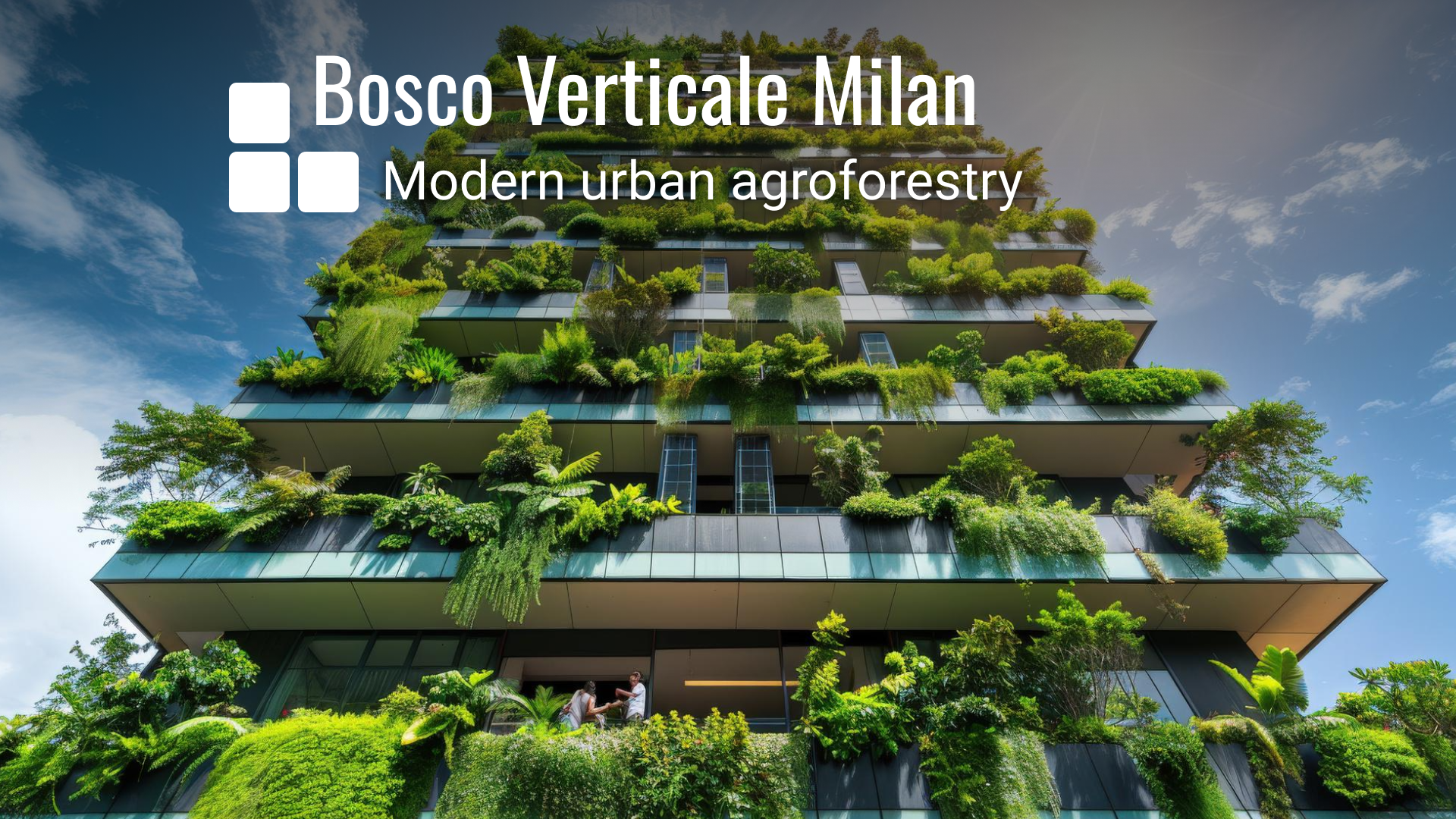
The Bosco Verticale, or vertical forest, is a Milanese building located in the Porta Nuova district, created in 2014. The building combines modern architecture with the idea of sustainability. The complex consists of two high-rise residential blocks that have been covered with lush vegetation (as many as 900 trees in total). One of the blocks is 111 metres high (Torre E), the other 76 metres (Torre D). The Bosco Verticale building, designed by architect Stefano Boeri and his team, is an example of how modern cities can combat climate change and over-urbanisation.
Vertical forest in Milan awarded
The Bosco Verticale Milan has won several important awards since its creation, including 1st place at the International Highrise Award in 2014, where the jury pays attention not only to the building’s appearance but also to its social dimension. In the same year, the skyscraper reached the 2nd step of the podium of the most prestigious architectural award, the Emporis Skyscraper Award. It was also awarded the title of ‘Best Skyscraper in the World in 2015’ according to the Council on Tall Buildings and Urban Habitat.
Milan’s tree-lined block – the benefits of vertical cultivation
Bosco Verticale not only creates a unique urban landscape, but also supports the microclimate:
- the plants that populate the buildings act as natural air filters, reducing carbon dioxide concentrations and particulate matter production,
- vegetation helps to lower the ambient temperature by absorbing CO2 and producing oxygen, which is particularly important during hot periods,
- provides greater acoustic and thermal comfort, as plants serve as an insulating layer against noise and extreme weather conditions,
- the vertical forest is a safe refuge for birds and insects.
Bosco Verticale an inspiration for other cities
Milan’s tree-lined building is an inspiration for cities around the world. Especially those struggling with problems of air pollution and lack of green spaces. Bosco Verticale shows that an innovative approach to urban planning can change the way we think about agroforestry in cities.
Milan has proven that a vertical forest can contribute to improving the quality of life for residents by reducing the effects of over-urbanisation. It is therefore worth using Stefano Boeri’s idea in other places (China, among others, has done so so far).