
Table of Contents
Thanks to modern technologies such as artificial intelligence or automation and precision farming systems, farms are becoming more efficient, sustainable and resilient to deteriorating climatic conditions. It is not without reason that experts predicting the coming changes announce that agriculture 4.0 is now moving into the next phase (agriculture 5.0). This means that in 2025, the use of modern technologies by farmers is expected to be even more widespread. What new developments in agriculture await us this year?
Agriculture 5.0 – trends for 2025
The concept of agriculture 5.0 combines advanced digital technologies, automation and precision farming to ensure higher productivity and minimise environmental impact. Agriculture is becoming more integrated with technology to optimise resource use, reduce waste and improve food quality.
In addition to the use of modern technologies in agriculture, such as smart machines, autonomous robots, IoT (Internet of Things) sensors, drones or artificial intelligence, it is expected to be important to counter soil degradation. Hence the growing popularity of regenerative agriculture. It involves monitoring the nutrients in the soil and taking care of the humus layer. Crop rotation helps with this.
Modern technology in agriculture – automated irrigation systems
Automated irrigation systems work on the basis of data collected in real time by soil sensors, air humidity sensors and a satellite that forecasts weather conditions. The systems are equipped with advanced artificial intelligence algorithms that analyse the collected data and make irrigation decisions at the optimal time.
This type of cutting-edge technology in agriculture makes it possible to dose water accurately, minimising water loss and preventing crop overflow. As a result, farmers can save up to 40% of water.
Weather forecast monitoring apps – will they protect against drought?
Apps that help manage water in a sustainable way should play an increasingly important role. Their operation is based on the analysis of meteorological data and local water consumption limits. Such a system is already in operation in the USA, among others.
Farmers can download an app that suggests how much water to use to irrigate crops, based on the weather forecast and the current state of water resources. The technology also takes into account limits imposed by local authorities (which can be increased during periods of drought). This allows sustainable management of drinking water in water-stressed regions. In time, this idea should be used by more and more countries.
GPS camera system will help control weeds
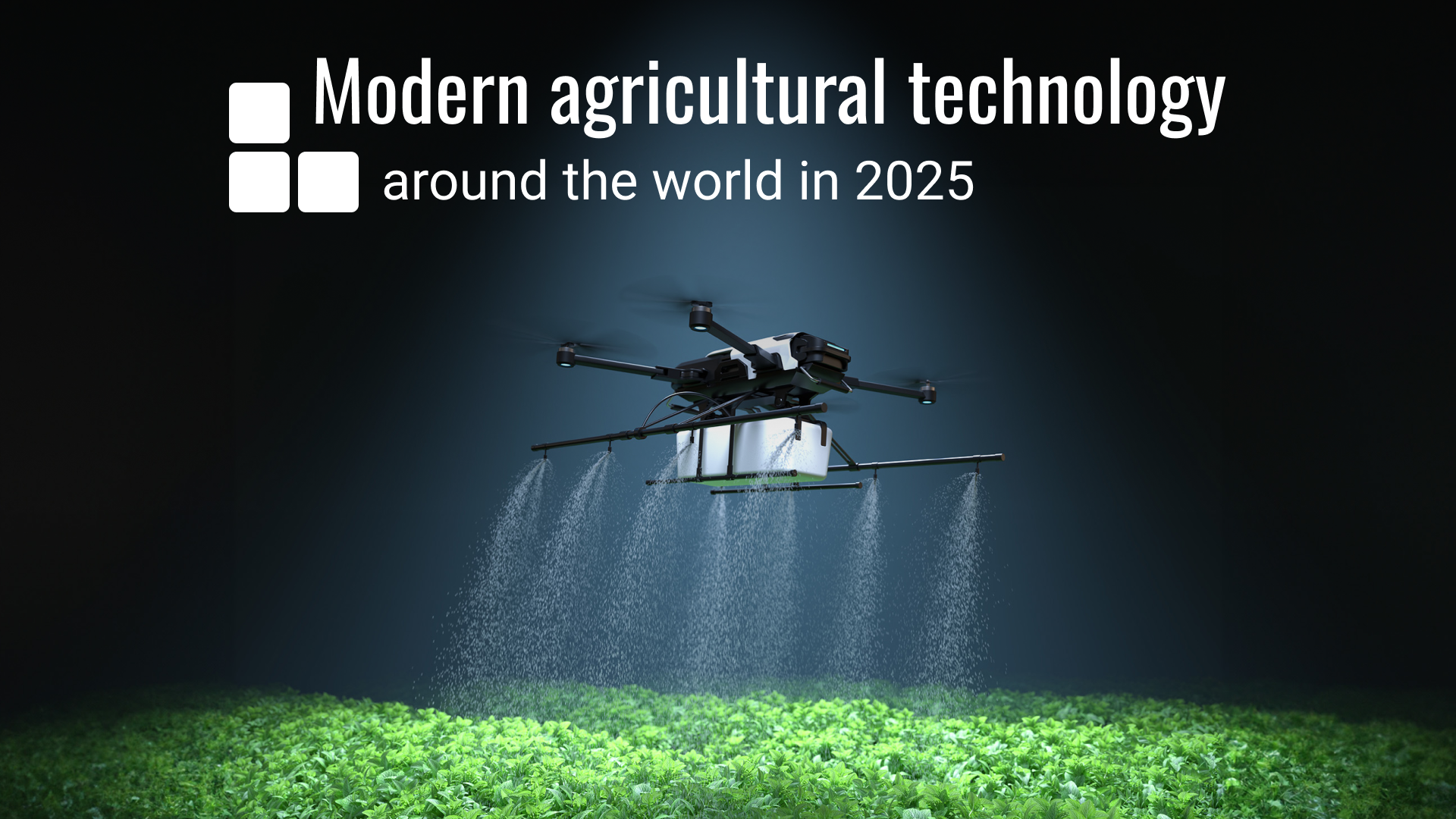
Modern technology in agriculture also helps in the fight against weeds. One solution is GPS camera systems that work with drones to monitor crops. Drones equipped with high-resolution cameras and GPS systems regularly scan crop fields, picking up where weeds appear.
Based on the data collected, the systems generate maps that allow herbicides to be applied precisely – only in the areas that require intervention. This reduces the use of chemicals, which has a positive impact on the environment and lowers production costs.
Humic acids – more than just digital technologies
Although automation dominates modern agriculture, it is not only digital technologies that are helping to drive it forward. In 2025, the use of natural preparations such as humic acids is to be promoted even more. These are organic substances formed during the humification of plant matter. They improve the structure of the soil, increase its water storage capacity and promote the growth of beneficial microorganisms.
It is important that farmers take a holistic approach to their work, using different technologies simultaneously. In the long term, this will translate into higher yields, better crop quality and an improvement in our environment.